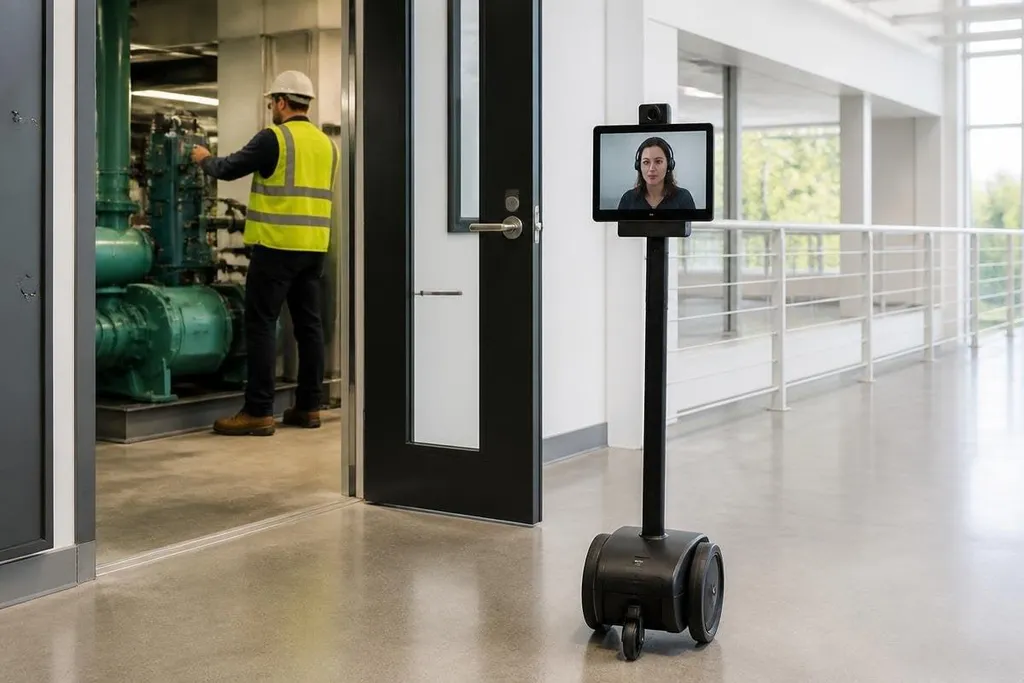
A telepresence robot gives a remote person a camera, screen, microphone, speaker, and wheels inside another site. The business opportunity sits in that access: a specialist can see, speak, and move through a place without travelling there.
- Remote staff can inspect rooms, speak with workers, and join meetings from a distance.
- Site owners may pay for fewer trips, faster contact, or access to outside skills.
- The hard part is fitting the robot into real work, not making it move.
What the customer is buying
The robot itself is only one part of the sale. The customer is paying for a remote presence that can move through a building and interact with people there.
That makes the first market clear: places where travel takes time but a person still needs to look around. A remote engineer might inspect a machine room. A manager might visit a second site. A teacher might speak with students from another location.
The robot needs more than a video call for these jobs. Its wheels let the remote operator change position. The camera gives them a view of the room. The screen shows the remote person to anyone nearby, so the conversation can work in both directions.
A fixed camera can cover one spot. A telepresence robot can move between spots, but that extra movement creates work. The site needs clear paths, reliable wireless coverage, charging, and someone who can help when the robot gets stuck.
Business models worth testing
A company could sell the robot to each site, rent it by the month, or run a service where trained staff operate robots for several customers. Each model puts a different task on the buyer.
A sale may suit a hospital group, factory network, or university that needs regular access at known locations. Rental lowers the first payment and gives the customer a way to test the work before buying equipment.
A managed service may fit customers who need remote visits but don't want to hire operators or handle repairs. The service provider would need to define what the operator does, when they are available, and what happens if a visit cannot be completed.
The clearest use cases have a cost that the robot can affect. Fewer site visits may cut travel. Faster contact may reduce waiting for a specialist. A remote tour may help a customer decide if an in-person visit is needed.
A trial should compare the robot with the current process, such as a video call or a plane trip. Track travel cost, staff hours, response time, and failed connections over the same period. Reports on telepresence robots from Robot24.com can add dated deployment details before you decide if the plan survives the failure cases below.
Where the plan can fail
Remote control does not remove the need for local help. Someone may need to move a chair, open a door, reconnect a charger, or guide the robot around a narrow turn.
Privacy also changes the sale. Cameras and microphones can record sensitive areas, so the buyer needs rules for access, storage, and recording. In a factory, the robot must also stay clear of vehicles, machinery, and marked work zones.
The operator's connection matters just as much. Video delay can make driving hard, and a dead battery ends the visit. A business that sells access should state these limits before the trial begins.
The market is not every place with a meeting room. I'd skip any plan that cannot name the task, the site, and the cost of the current human visit.
A practical decision guide
Use this check before you buy, rent, or build a telepresence service:
- Name the visit: write down the exact task the remote person must complete.
- Measure travel: record trip time, travel cost, and how often the visit happens.
- Check the site: test doors, lifts, floor surfaces, wireless coverage, and charging.
- Set privacy rules: decide who can connect, what gets recorded, and how long files stay.
- Assign local help: name the person who handles blocked paths, faults, and charging.
- Run a comparison: test the robot beside the current method and count completed tasks.
That last check turns a broad idea into a business case. If the robot finishes the same work with less travel or shorter waits, the service has a reason to exist. If it mainly adds another screen and a person on standby, the buyer should keep the old process.
The next useful step is a small site trial with one named task, one remote operator, and a written cost comparison. Until those results exist, telepresence robots are a possible service model, not a guaranteed saving.